Printing Technology
Gravure Printing
There is a wide variety of modern printing techniques, which can be categorised according to the type of plate:
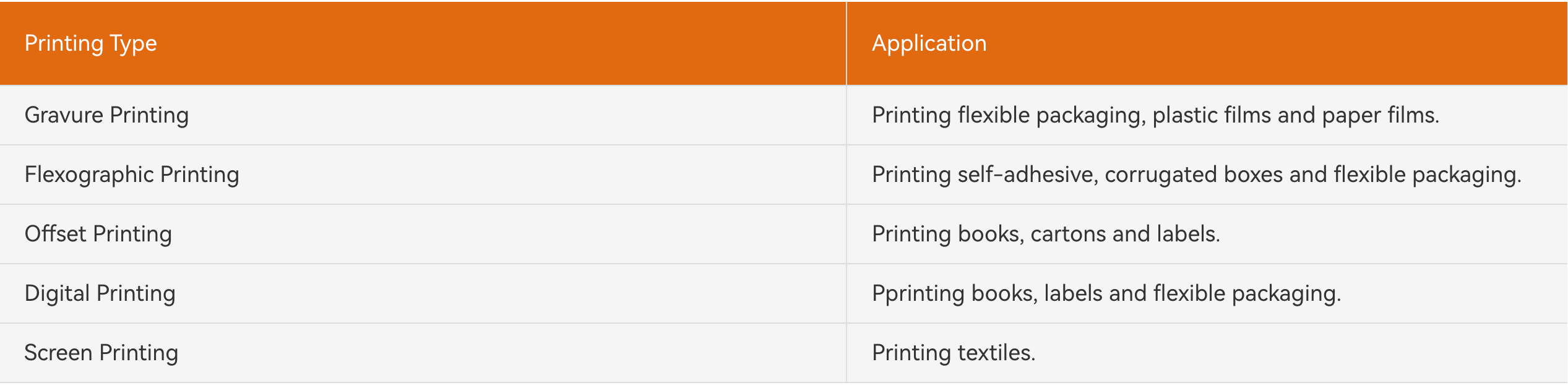
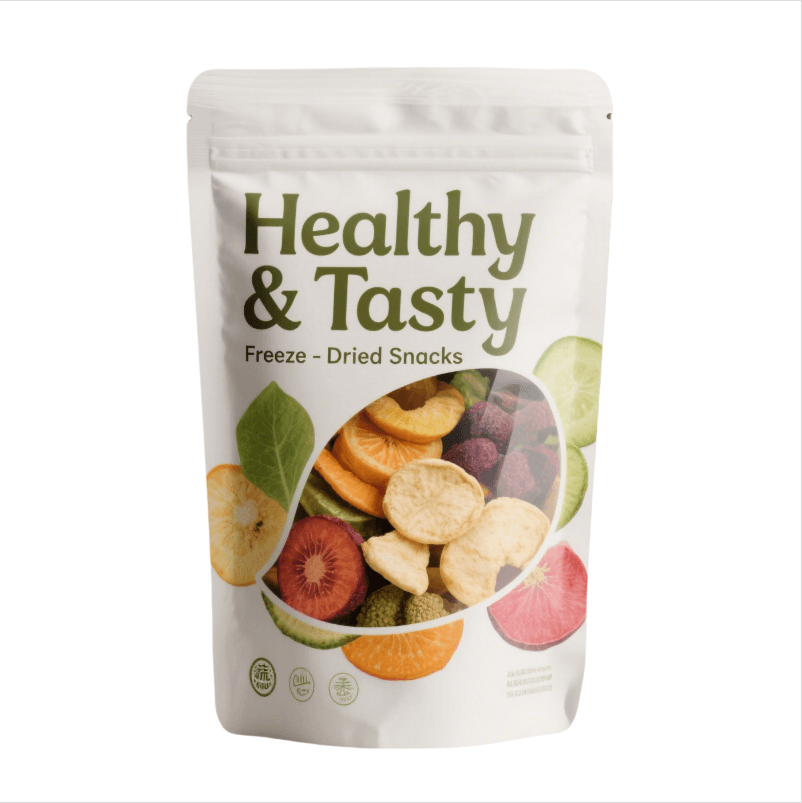
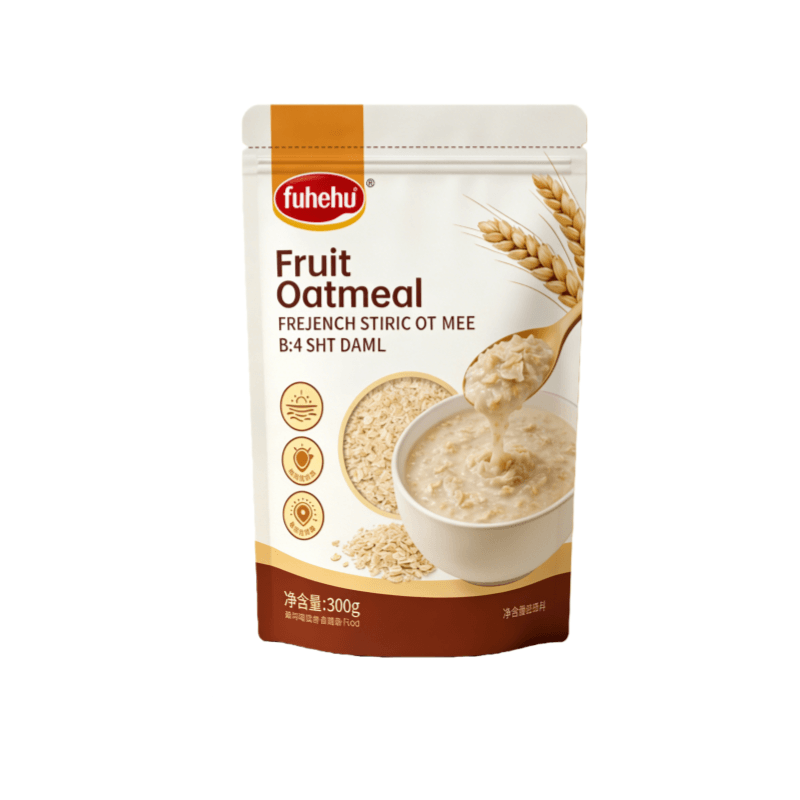
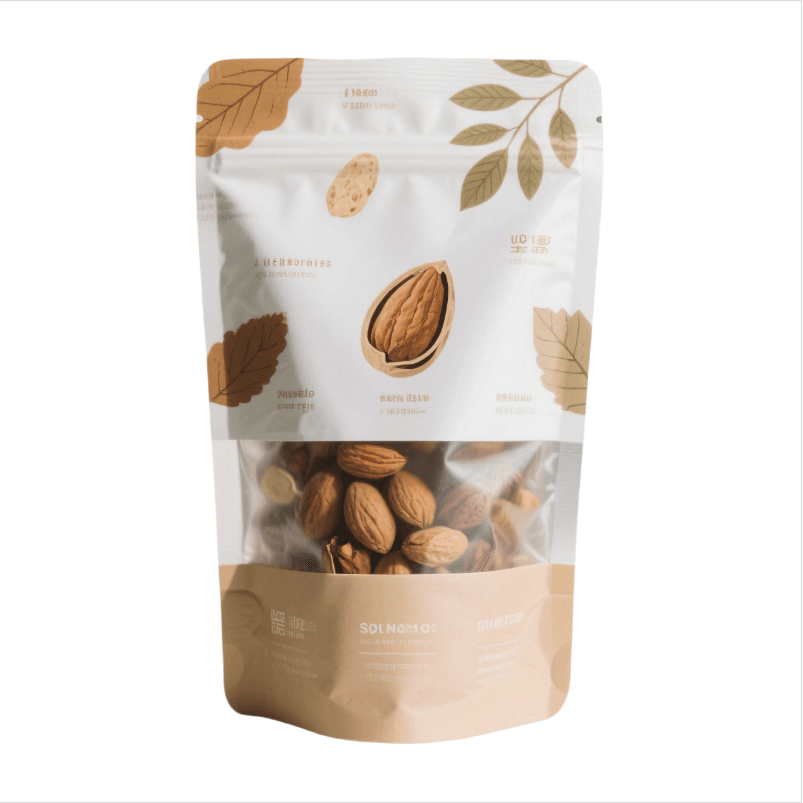
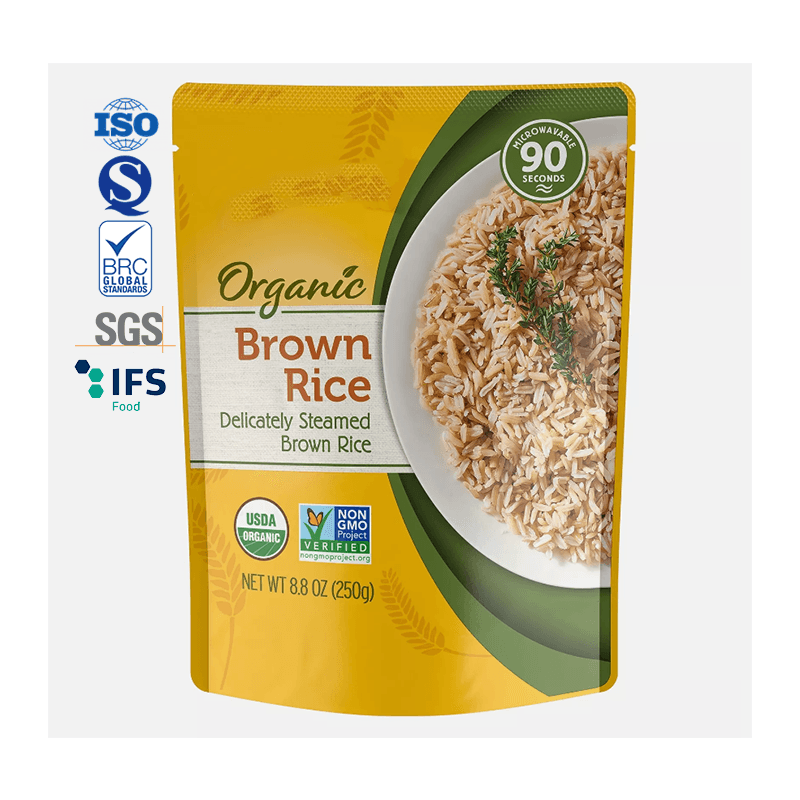
In flexible packaging printing , gravure printing occupies an important position in the industry by virtue of its high printing quality, high register accuracy and high printing efficiency.
Advantages
High Printing Quality
Rich image layers
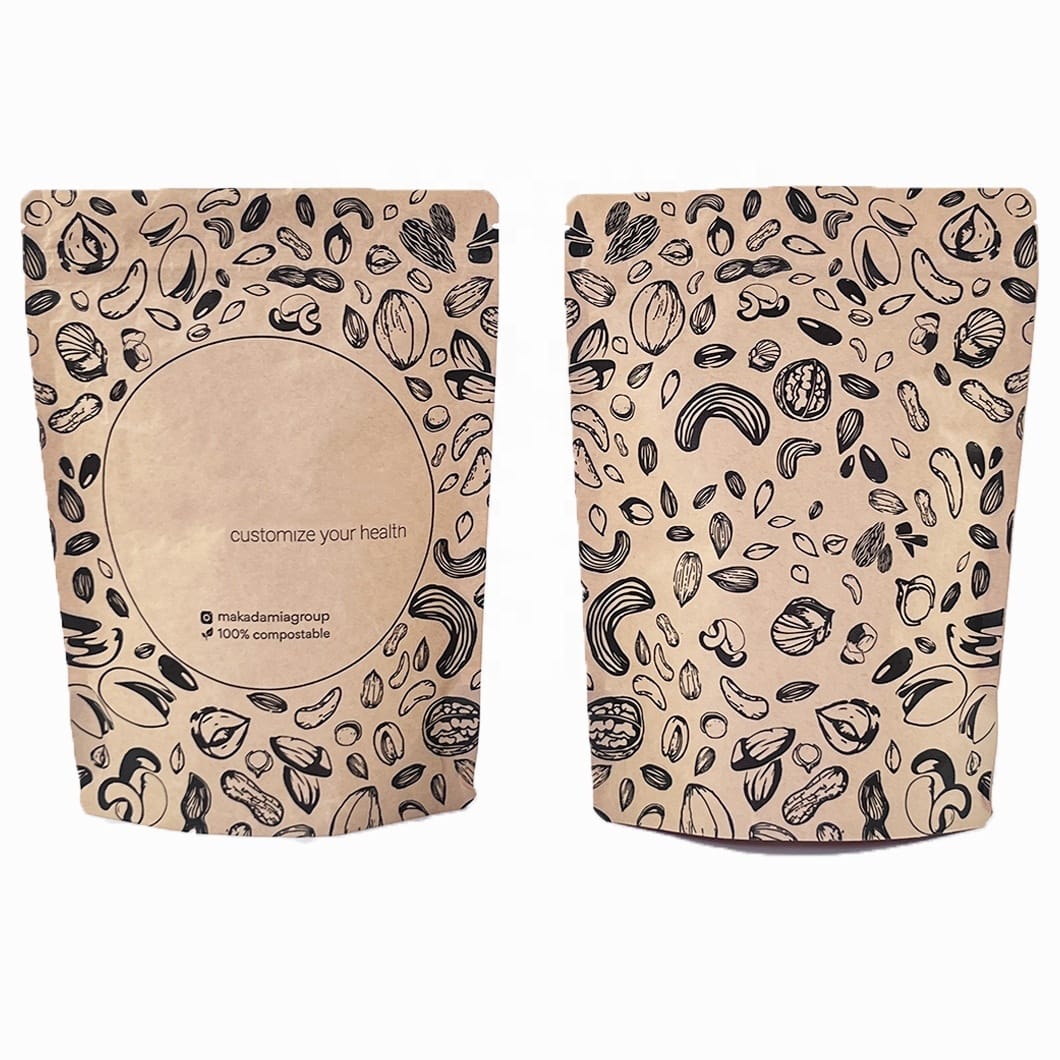
The metal printing plate of gravure printing adopts a recessed aperture structure. After filling the recesses, the ink will be transferred to the substrate by the impression cylinder, which can precisely control the ink amount, thus presenting rich colour layers and delicate image details.
Vivid and full colors
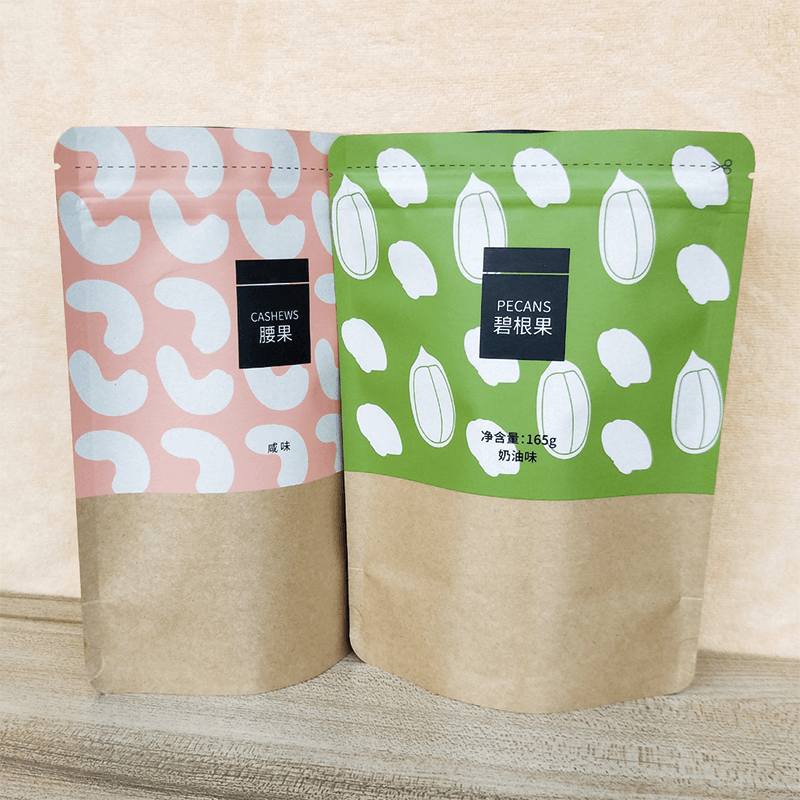
Gravure printing uses solvent-based ink, which has high color saturation and produces vivid and bright printing effects, and can well reproduce the colors of the design.
Thick printing ink layer
Gravure printing has a thicker ink layer than other printing methods, which can present better three-dimensionality and texture.
High Register Accuracy
Stability of mechanical structure
Gravure printing adopts an integral metal cylinder as the printing plate (copper plate or chrome-plated steel plate), compared with the flat plate of offset printing or the flexible resin plate of flexographic printing, the metal cylinder is not easy to be deformed in high-speed operation, which avoids overprinting deviation due to the expansion, contraction and displacement of the plate. In addition, the gravure printing machine adopts high-precision gear transmission between the impression cylinder and the metal cylinder, with minimal mechanical clearance to ensure that the graphic position of each colour group is strictly synchronized.
Plate Characteristics Advantage
Gravure's graphics are formed into uniform apertures through engraving or etching. With controllable depth and shape of the apertures and stable ink transfer, register errors caused by fluctuations in ink layer thickness can be effectively reduced.Besides, compared with offset printing, which requires the control of ink and water balance, gravure printing transfers ink directly through embossing without the need for fountain solution, which avoids register problems caused by imbalance of ink and water.
More Advantages
High Printing Efficiency
Gravure printing adopts rotary printing method. The printing speed is fast enough to achieve continuous printing, suitable for mass production.
Good anti-counterfeiting performance
Gravure printing can be combined with a variety of anti-counterfeiting technologies to improve the anti-counterfeiting performance of products.
Production Process of Composite Flexible Packaging
Composite flexible packaging usually requires two or more film materials with different properties. After completing the gravure printing, the printed layer and other functional layers will be combined together through the lamination process to form a new high-performance flexible packaging material with multiple functions. It combines the advantages of each layer of material, overcoming the limitations of a single material, to meet the needs of different products in transportation, storage, sales and other aspects of packaging performance.
1. Preparation for Printing
Design draft production: According to the customer's needs, design the packaging pattern, text and other content, and determine the colour, font, size and other details.
Metal cylinder making: The design is output to film and then the graphic information is transferred to the metal cylinder by means of electronic engraving or laser engraving.
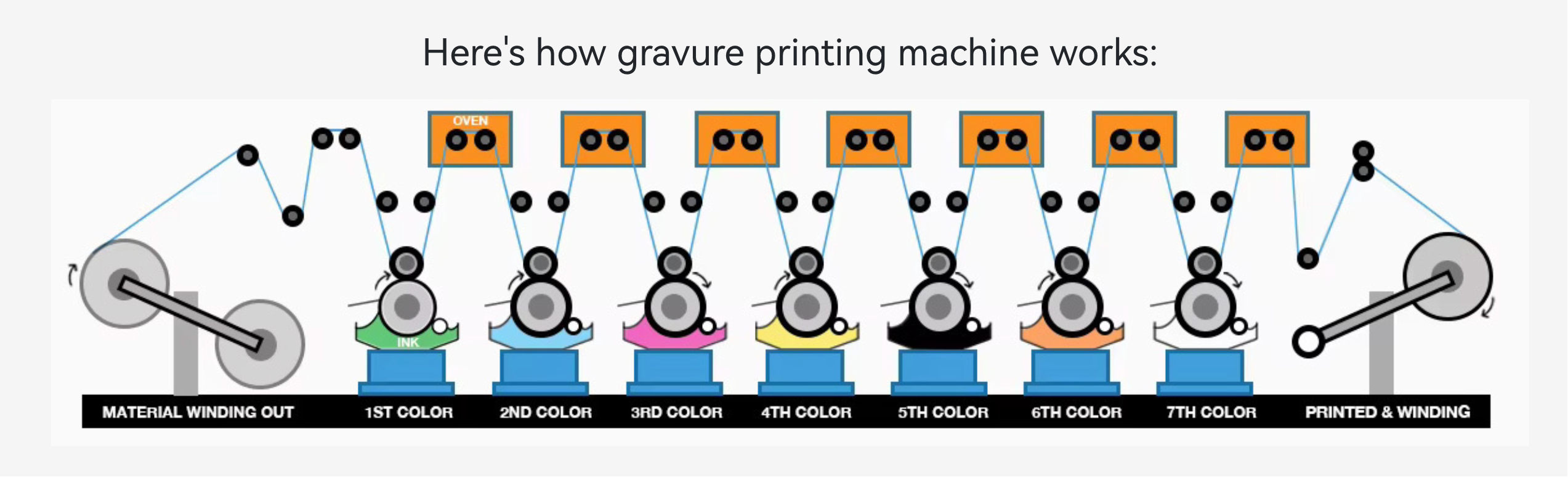
Ink blending: According to the colour requirements of the design, blend spot-colour inks or use CMYK four-colour inks.Up to 14 colors can be printed.
2. Gravure Printing
Metal cylinder loading: Mounting the finished metal cylinder on the printing press.
Inking: Pouring the prepared ink into the ink tank and transferring it evenly to the metal cylinder through the ink rollers.
Squeegee: Using a squeegee to remove ink from the blank portion of the metal cylinder surface, leaving only the ink in the pits.
Imprinting: The transfer of ink from the pits to the substrate (plastic film) by imprinting it on the metal cylinder.
Drying: Drying and curing the ink on the surface of the printed film using hot air or ultraviolet light.
3. Production of Packaging Film
Laminating: Laminated the printed film with other materials (e.g. aluminum foil, Polyamide, etc.) to improve the barrier, strength and other properties of the package.
Curing:Put the already laminated film into the curing room. The temperature of the curing room is generally 40℃ to 60℃, and the curing time varies from 24 to 72 hours according to the number of layers to be laminated. The final product is packaging bag film.
4.Production of Pouch Bags
Slitting: Slitting the packaging bag film into the required size and shape.
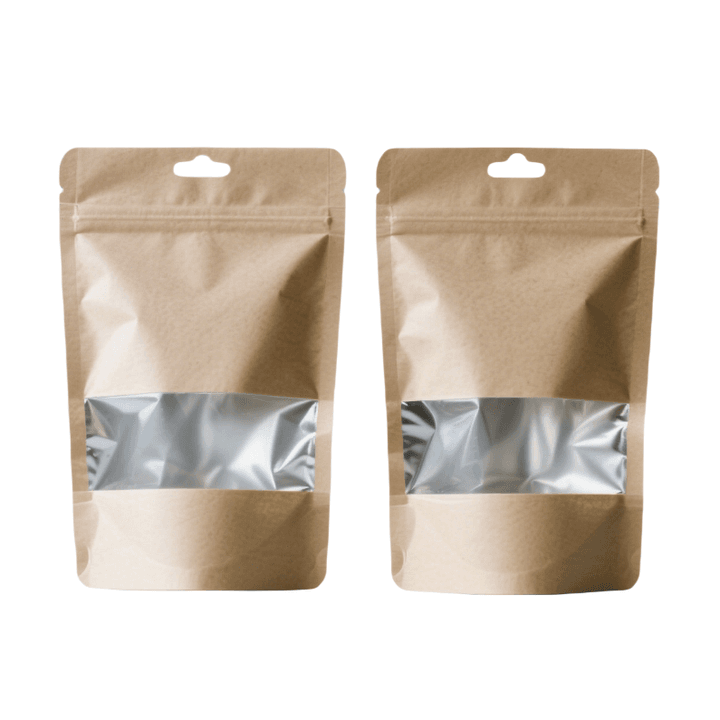
Bag-making: The slit material is made into various shapes of bags, such as three-side sealed bags, stand-up pouches, zip bags, etc.
Inspection: Conduct quality inspection of finished products to ensure that the printing quality and size specifications meet the requirements.
5. Packaging for Storage
Packing: Pack the qualified finished products and label them.
Warehousing: Store in the warehouse and prepare to ship.